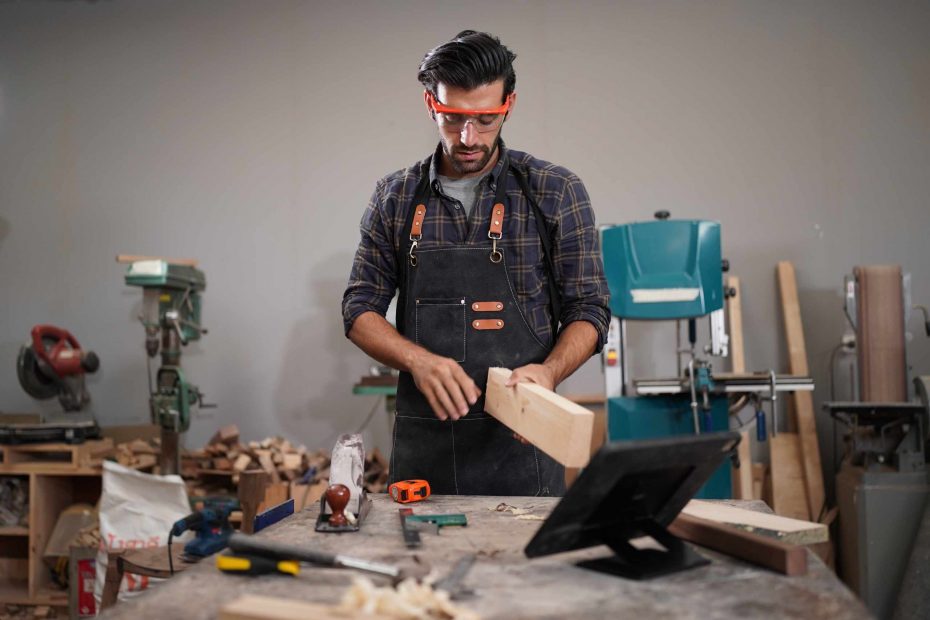
What should be checked before clamping up a simple corner? A clamped corner looks solid while being quietly distorted. The boards can slide, an edge can stand up or the angle can close up and you may never know. So before you apply full clamp pressure to a simple corner joint check the following. The clamp holds the joint together, it does not cover up problems in the layout, cut or dry fit.
Prior to clamping, set the two corner boards against each other on your workbench and look carefully how the board faces are meeting. The ends should be clean and meeting flush as the edges can be (as long as possible). If one end is loose or if there is visible separation at this stage, do not tighten your clamp any further before investigating the cause of the problem. A gap can be from saw wander, from a rough board, from something small in the seam of your joint like some dust from sanding, or from a misalignment of measurement. Tightening the clamp may cover up the problem for a while but it may also result in another problem for the joint.
Use the square now before the joint is tight. Place the square into the joint and make sure both board faces are touching the square. If there is a gap on one board face, there is a possibility that the corner has not been set up perfectly square at the start. Adjust and look again. Sometimes it is as simple as removing a speck of dust from the joint seam, or turning the boards over to reveal a better face, or trimming the rough ends of a practice board.
Also, position the clamp correctly. A clamp positioned too far from the seam may cause the boards to slide unevenly. A clamp pressing at a wrong angle can cause the boards to slip out of position as it becomes tighter. Close the clamp in gently, while watching the joint and its pencil marks. Watch carefully that the clamp jaws are keeping the end grain and the flush edge from sliding. If one part of the board begins to move stop and reposition. This will help develop your feel as to when a clamp is actually assisting and when it has taken over your project.
Practice clamping up your corner three times without gluing it together. Tighten just enough to make sure the boards will stay in position and unclamp it. Watch the joint for any changes that have taken place. Did the board slide forward? Did any of the joints edges stand up? Does the square still fit into the joint? This practice is helpful because it teaches clamping as it relates to joint assembly and construction, but it does not require that you have a full project under way. It just requires that you learn how wood reacts in a given situation to pressure.
In addition, before you clamp in place your final joints for gluing and screwing or nailing together mark out the position of the pilot holes for any screws you are using. Screw placement near board ends or edges is where many woodworkers lose boards to splitting, especially on narrow practice pieces. Check that your holes will not split the board, that you have clearance for the drill bit size, the screw head will not clash with the clamp or your hand position. Making these changes before you use glue or fasteners will help the joint stay in good condition and keep you from having to make any adjustments.
The biggest improvement in your corner clamping technique will not be dramatic, it will be quiet. Your boards will stay where they started, the square will fit into the corners without problems, you will have less of an edge gap to correct, and your clamps will feel supportive instead of being a fight to control. Look at your gap, look at your square, look at the direction of your clamps, one more time before you clamp in the next corner joint. It may just save your entire joint assembly from being distorted.